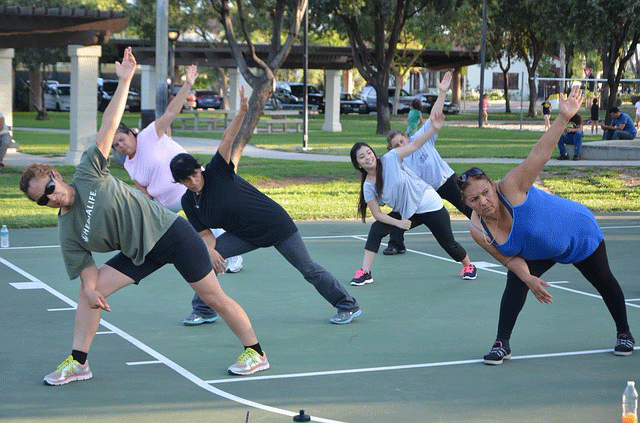
Over the many years I’ve been involved in the fitness industry I’ve seen different theories and recommendations regarding stretching. Certain questions like “Should I stretch before or after exercise?” or “Should stretching be static (not moving) or dynamic (incorporating motion)?” have at times been a source of controversy. Often practitioners swear by their particular choices whether or not research supports them. Being a firm believer that what works for one may not work for everyone, I would never argue with anyone who benefits from whatever regimen works for them even if it isn’t something I would necessarily recommend. We are all an experiment of one and we each need to find our own best practice. But each of us still needs to keep an open mind since everything, including our bodies, is constantly changing.
Fortunately, recent years have seen considerably more interest among researchers in conducting well-designed studies examining which exercise and movement strategies work best for certain populations. With chronic illness on the rise, it is no accident that the medical community is seeking new solutions for patients whose medication options may be limited or even ineffective. Health care costs are also increasing so any intervention which is low cost and effective is worth investigating.
One such study published in the Journal of the American Medical Association for Internal Medicine found that stretching and yoga were both helpful in easing low-back pain among chronic sufferers. This has been a particularly problematic condition since many of the current recommended treatments have not been highly effective. Researchers noted that, “Self-management strategies, like exercise, are particularly appealing because they are relatively safe, inexpensive, and accessible and may have beneficial effects on health beyond those for back pain.” Although the results in this study showed comparable benefits from both yoga and general stretching classes, yoga showed a slight edge. Researchers thought this might be “because [yoga] includes a mental component that could enhance the benefits of its physical components”. This makes sense to me because an important aspect of yoga practice is learning to pay attention to how your body works and, perhaps more importantly, coordinating breath with movement. Breathing techniques are a key aspect of yoga instruction that are not often emphasized in typical stretching or even physical therapy techniques. Participants in a third group in this study were given a book on the causes of back pain and advice on treatment. Both the yoga and stretching groups improved significantly more than this self-directed group. This result led me to wonder if the benefits of group participation and instructor-led classes also contributed to the positive outcome. Researchers did not highlight this possibility, but these are two pretty powerful ingredients. Perhaps future studies will dig into that possibility.
It is thought that one aspect of aging is a slow process of dehydration that can manifest as arthritis and impediments to certain metabolic processes. One of the goals of yoga and other types of stretching is to hydrate the tissues by increasing the blood flow in the target areas. These practices also help to relieve tension in overworked muscles, joints and connective tissue. According to the Mayo Clinic the top 5 benefits of stretching include:
- “Increased flexibility and joint range of motion:
Flexible muscles can improve your daily performance. Tasks such as lifting packages, bending to tie your shoes or hurrying to catch a bus become easier and less tiring. Flexibility tends to diminish as you get older, but you can regain and maintain it. - Improved circulation:
Stretching increases blood flow to your muscles. Blood flowing to your muscles brings nourishment and gets rid of waste byproducts in the muscle tissue. Improved circulation can help shorten your recovery time if you’ve had any muscle injuries. - Better posture:
Frequent stretching can help keep your muscles from getting tight, allowing you to maintain proper posture. Good posture can minimize discomfort and keep aches and pains at a minimum. - Stress relief:
Stretching relaxes tight, tense muscles that often accompany stress. - Enhanced coordination:
Maintaining the full range-of-motion through your joints keeps you in better balance. Coordination and balance will help keep you mobile and less prone to injury from falls, especially as you get older.”
Recent recommendations suggest that it is no longer advisable to stretch before exercise. This is something I have long advocated. It is preferable for muscles to be warm before stretching. There is less danger of injury from over-stretching. Five or 10 minutes of easy movements that begin to raise your heart rate, like walking before running or simply moving arms and legs rhythmically, can effectively prepare your body for some gentle stretching. Having said that, I also realize that there are many people who experience pain upon waking up in the morning. This can be caused by lack of movement during the night causing stiffness. In that case, some gentle stretches can be beneficial even before getting out of bed. The key here is GENTLE. Take it slow and breathe. Some examples of simple stretches that can be done while still in bed include:
- Reaching arms overhead for a full body stretch;
- Bending one knee at a time and drawing the knee towards your chest, let the other leg rest on the bed; repeat a few times; Note: if this is too difficult you can simply bend your knee and slide your heel towards the end of the bed and then back towards your hips a few times and then switch legs
- Keeping one knee bent above your hip, use your hand to gently take that knee back and forth from one side to the other and then hold over the straight leg;
- Roll to one side and press up to seated on the edge of the bed. Lift shoulders up to your ears and then down a few times
- Bring your elbows in front of you at shoulder height and open your arms to the side and then bring them back to the front few times;
- Stretch one leg out in front of you, keep the other knee bent with foot on the floor, then lean forward slightly; change legs;
- Flex and point your toes; make small ankle circles;
- Once standing, reach arms overhead and press up.
There are many variations you can add to this routine like leaning from one side to the other (hold on to something stable), gentle twists from side to side, etc. Just remember to take it SLOW. In our world, where hurrying seems to be valued it is often difficult for us to just slow down. The benefits of stretching are often best experienced when stretches are held for at least 30 seconds. Sometimes moving slowly in and out of a stretch before holding can help prepare your body to release tension. While holding the stretch try scanning your body to see where you might be holding tension. Then try using deep breaths to help release that tension wherever it exists anywhere in your body. This will help you to relax, increase your sense of well being and may even reduce muscle fatigue giving you more stamina. Part of the practice is learning to enjoy this experience. And, as frequently noted in this blog, it is a practice. The more you engage with consistency, the more you will benefit. If you need help or advice, try attending a gentle yoga class or consulting a physical therapist. Incorporating yoga or any type of stretching into your daily routine will increase your flexibility in many ways. Give it a try and then keep at it.

 Mile High Pilates and Yoga