By Peg Ryan
It is often difficult to initiate a new regimen into our lives. We all know we should move more for improvements in health, energy levels and the ability to handle life’s daily ups and downs. But it can be hard to do these things by ourselves. Think back to those New Year’s resolutions, for example. Hopeful plans and good intentions were laid out and maybe even followed for a while only to succumb to other seemingly more pressing demands on our time. The first time you allow your resolution to sink below some other priority is the moment the best intentions begin to fall apart. One of the keys to stopping the slide down this slippery slope is to commit enough time to allow your plan to become a habit. Many experts agree that as few as 6 weeks can be sufficient to establish the pattern for habit. Then if life intervenes, as it so often does, it becomes much easier to get back into the groove. Dictionary.com defines habit as “an acquired behavior pattern regularly followed until it has become almost involuntary”. Wouldn’t it be great to have exercise become such a consistent part of your life that you don’t even need to think about it! Your body almost does it without you.
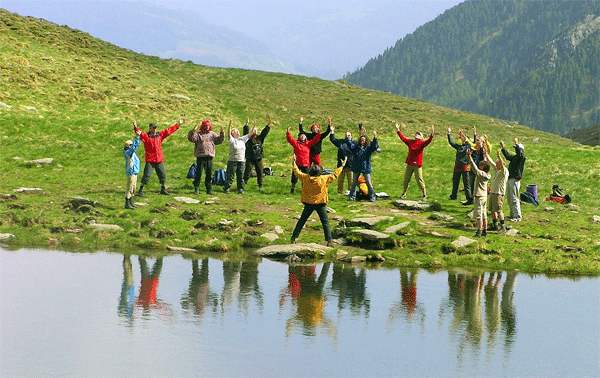
This is where group classes can help. As a firm believer in the power of a group, I’m convinced it is often the best way to kick-start your self-improvement campaign. Even if you only commit to that 6-weeks period, it can be sufficient to put that habit in place. At the end of that time period, if you’re not hooked on the group experience, you will still find it easier to pursue your plan on your own. Here are just a few of the many ways in which a group can help keep you motivated:
- A specific time and place are allocated to the effort. Think of all the impediments that interfere when you are trying to exercise at home. The kids and pets suddenly demand your undivided attention. You can try closing a door if you have one, but you already know that won’t work. Then there’s the lure of the phone and the computer. And that pile of laundry or dishes you failed to finish last night. Etc. Etc. A group class is a scheduled event. You can put it in your calendar and designate yourself as “busy” during that time. If a conflict arises you can simply say you are not available at that time. You don’t have to say why. You’re just busy. Other events can be scheduled around this committment. And, remember, all you need is 6 weeks to develop the habit so you can always tell yourself you’ll allow other possibilities when the 6 weeks have passed.
- Your instructor takes the lead. You can turn off your head and just go with the flow. No need to decide what to do. Think about the amount of time you can waste deciding if you should run, walk, bike, watch a video, go to the gym. Etc. Etc. Everything is thought out for you. And if you choose the right instructor, you will get expert advice and guidance usually at a bargain price. If you don’t like the instructor, find another one. There are so many types and styles of classes to choose from. Don’t let one bad experience derail your best laid plans. Sadly I saw yet another comment from a woman this week who said she tried a yoga class once, was instructed to do something (one thing!) she couldn’t do and decided to simply back off completely. My suggestion: if there is something you can’t do, don’t do it. Simple as that. Guaranteed the yoga police will not show up and drag you out of class. And chances are there are many things that you CAN do. So focus on those and just substitute something else for the thing you can’t or don’t want to do. You will still have the support of the group to carry you through the class.
- The group is a form of community providing that all important element of social support. Most of us have probably seen the studies that emphasize the importance of social connections to maintaining good health, especially as we age. People in the group will notice when you’re not there. We share concern for each other. Group members can sometimes even offer suggestions for modifications to help new participants find a way to learn unfamiliar moves. Established practitioners can encourage new ones with examples of their own improvement. We celebrate each other’s milestones and lament each others misfortunes. There are no judgments or expectations and all are welcome, regardless of age, ability or background.
- A group class is a great way to try something new, or to get back into something you tried before but set aside for one reason or another. Heard about Pilates but have no idea where to start? Come to a class. It’s better than a video because there is an actual person who can answer your questions. Do you have a particular physical limitation? Let your instructor know. The instructor can help you understand how to move in a way that will keep you from injury and maximize the benefits of the practice. Don’t forget also that as previously stated, you always have the option to abstain from something that doesn’t work for you. The support of the group can help you overcome fears and challenge yourself, but you never have to push beyond your limitations.
- Finally, it’s always more fun to share the experience. A common comment I often here is classes is “I would never make this much effort if I wasn’t in this class.” When you try to do these things on your own the tendency is to only choose those easy moves that you like. Also you will most likely do the same things over and over without trying anything new. This means that certain muscles may never get worked, leading to imbalances that can create complications over time. For example, many runners have really tight hamstrings. This can create knee, hip and ultimately back problems. We all need variety in our movements. Doing the same thing over and over will eventually lead to stagnation and possibly even injury. Group classes often involve total body movements that allow all of the muscles to work together bringing the body back into the rythym for which it was designed.
The human body is an amazing system. Although we are each individuals with our own specific quirks and oddities, our bodies are still made to move in concert with all elements working together like an orchestra. A group class can help bring that balance back and let your symphony sing again! The group class can help bring enjoyment to your movement practice. All fitness experts agree, the exercise you enjoy is the one you will stick with. So give it a try! You just might find out that you like it. And no matter what you feel like before you come, you will undoubtedly feel better when you leave.

 Mile High Pilates and Yoga